ISSUE 06: You're doing brand consistency wrong
Welcome to The Red Thread, a weekly(-ish) branding and culture newsletter exploring what founder-led brands can learn from cult luxury heavyweights in order to build the same kind of timeless, relevant, culturally aware, and irreplaceable positioning in their own categories.
If you find this useful and would like The Red Thread directly to your inbox, then subscribe for free below
Happy Wednesday, class.
Pop quiz time.
Background: The year is 2023. It’s July, and the TikTok girlies have descended into their ‘Tomato Girl Summer’. A season marked by performative trips to Italy, burning anything in their closets that isn’t linen or raffia, and perfecting their undone beachy waves over vine-ripened tomato salads in vintage ceramic bowls. Full Mediterranean cosplay, il dolce far niente and all that.
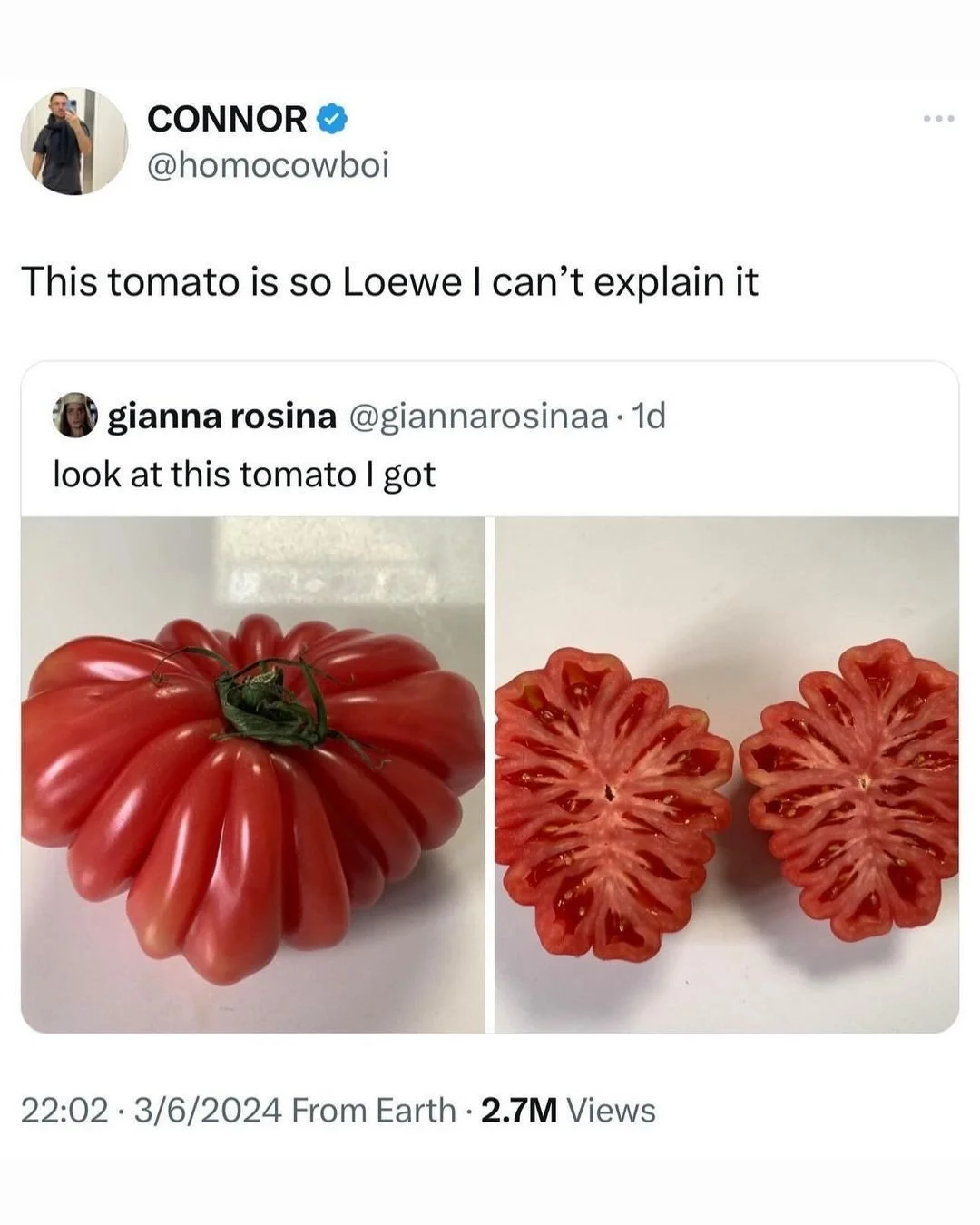
A year passes. Tomatoes fade. The girlies move on to Brat Summer, Salted Granola, whatever’s next. But then in early June, some guy named Connor Downey drops a tweet (an x?) so perfectly on point it sparks industry plant accusations:
Here comes the quiz question:
Why, after an entire summer of endless tomato content had already come and gone, did this random tomato immediately say ‘Loewe’ to 4.1M people (and counting)?
The Answer:
Because Loewe understands that creating a recognisable brand isn’t about consistency, but instead it’s about cohesion.
Let me explain.
That heirloom tomato felt “so Loewe” because it embodied the brand’s worldview in vegetable form. Surreal, playful, imperfect, and yet grounded. It signalled something grown rather than engineered. It was both functional and sculptural, which is exactly where Loewe lives - that space between utility and art where a bag is also an object and a scent is also a statement.
So when Loewe eventually put out the actual tomato bag and a tomato fragrance, it didn't land like a gimmick or a meme cash-in. It didn’t feel ‘late to the party’. It felt like clarification.
They have created such recognition that audiences can infer their brand from visual codes alone, rather than repeated logos or aesthetics. Loewe doesn’t need rigid aesthetic consistency because they’re consistent in what they stand for, how they interpret the world, and what role they’ve decided to play in it. Which means they can grow, pivot, experiment, even contradict themselves visually, and still feel coherent.
Loewe has rooted their brand in craft and cultural intelligence. Not as buzzwords but as an operating system.
Through their Foundation Craft Prize, they are not tokenistically a “patron of the arts” - their brand is strategically positioned as a custodian of contemporary culture.
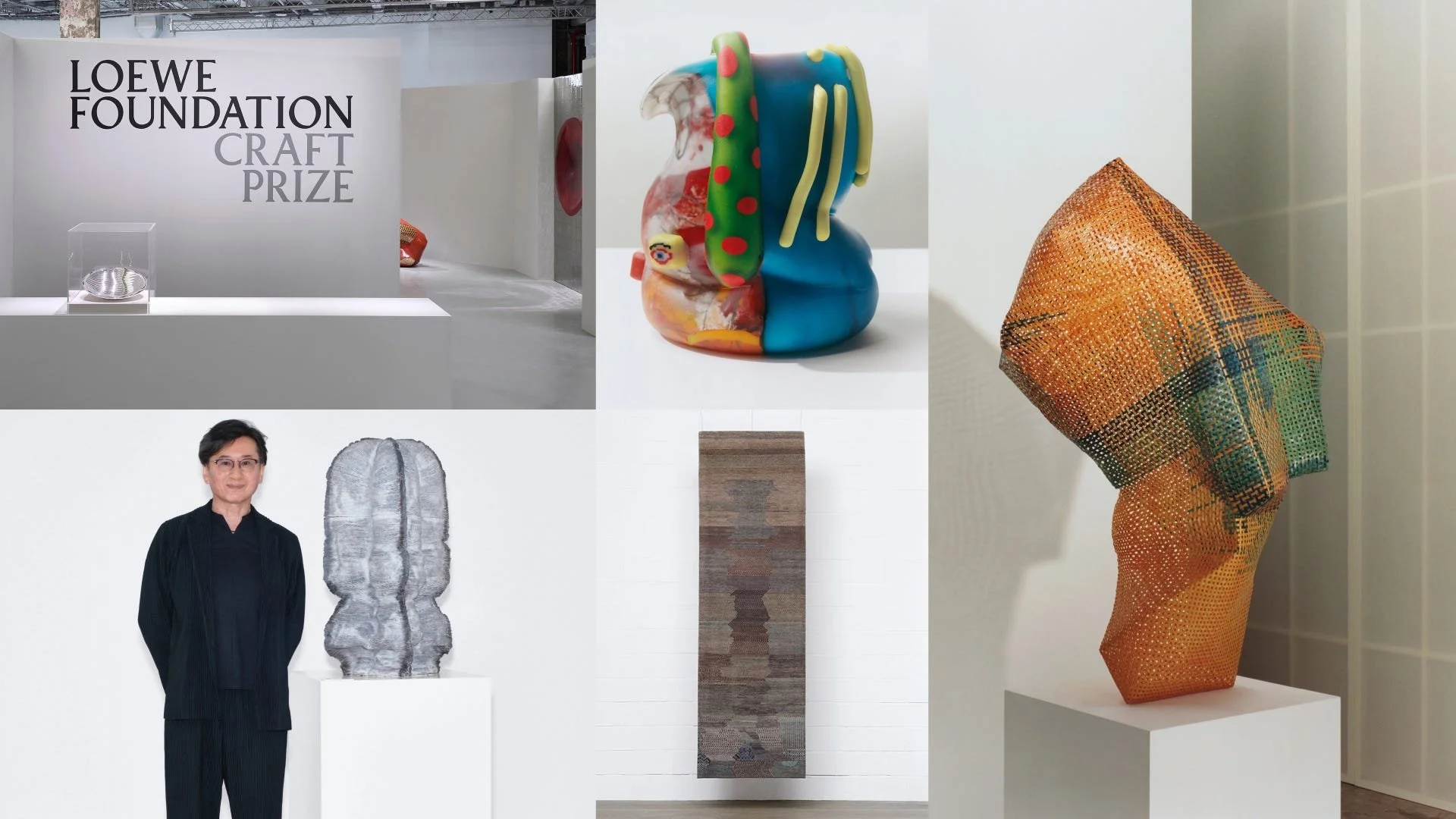
Loewe Foundation Craft Prize
Their campaigns, while all very different, share a closeness to art rather than advertising. Styling is often secondary to posture, texture, and narrative. The images are rarely trying to sell you an outfit, they’re inviting you into a reference.
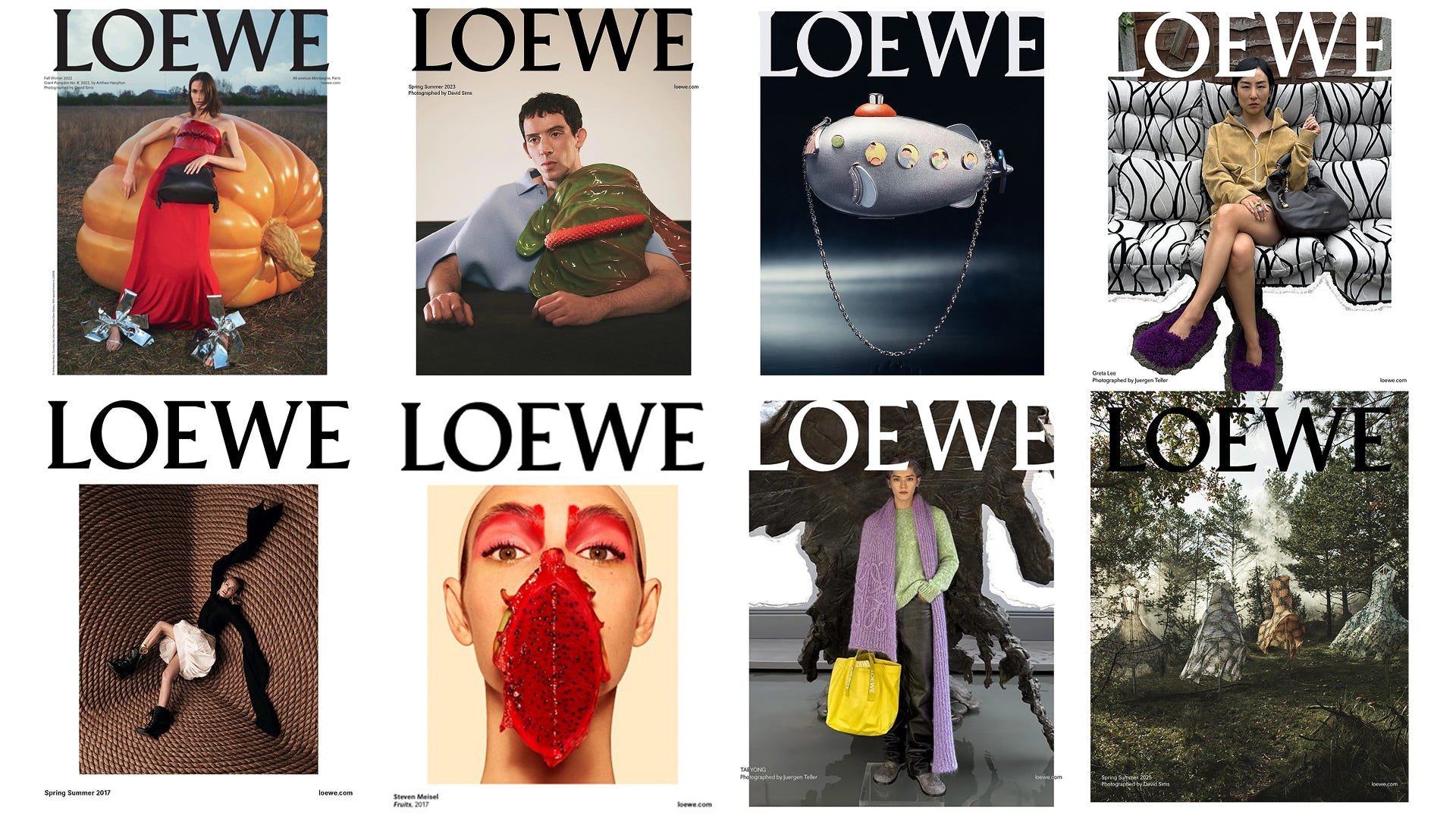
Season after season, their collections include pieces that push the boundaries between wearable fashion and surrealist sculpture, and asks ‘how far can craft be pushed before it becomes art?’. These pieces are then curated in stores amongst ceramics, woven objects, and furniture (often commissioned), creating a gallery experience rather than solely a shopping one.
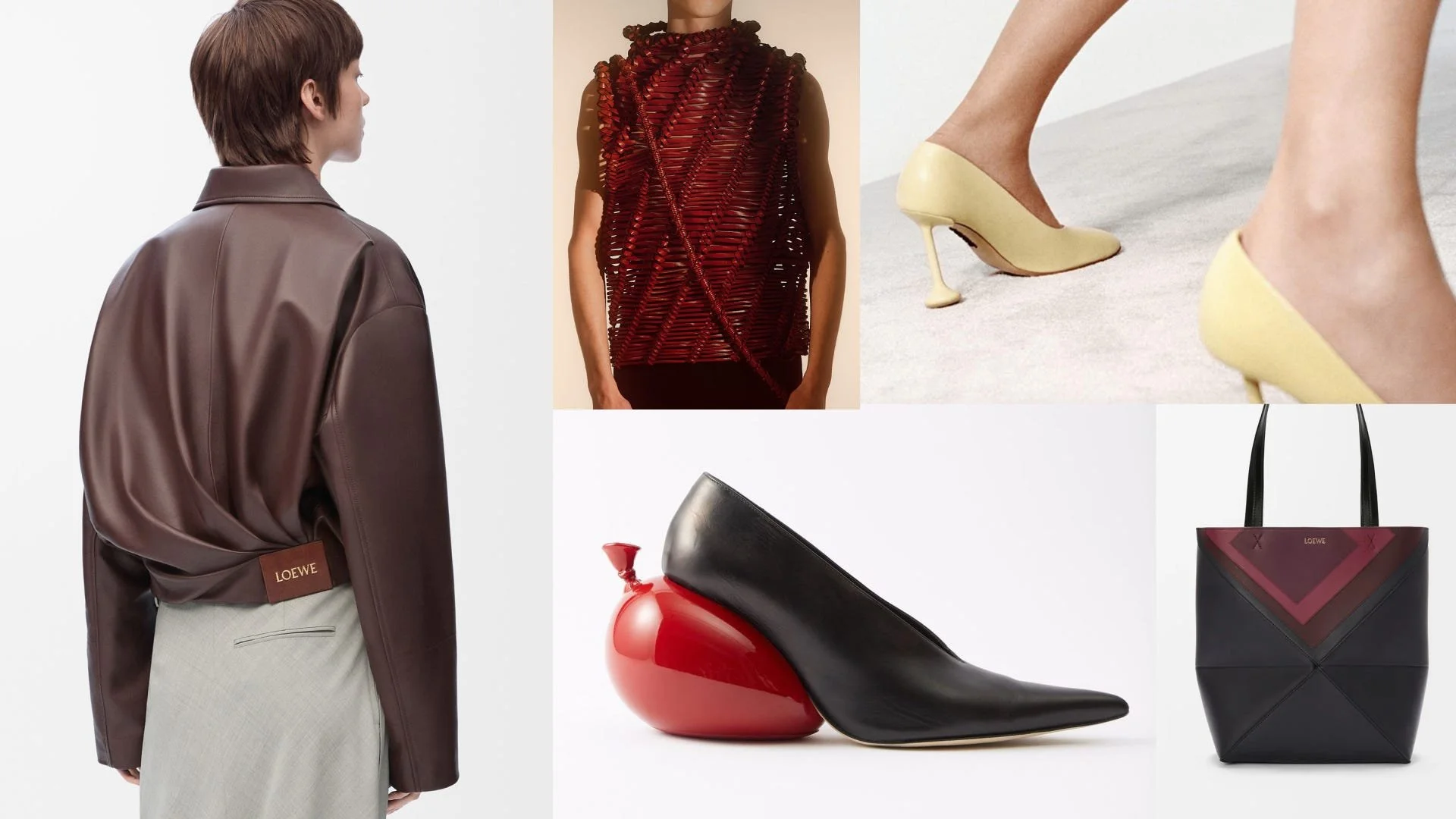
Loewe is consistent in their beliefs so they can be flexible in their expression. New collections, images, colours, typography are all held together because they are all coded with the same underlying foundations.
So what does this all mean for you?
You’re doing brand consistency wrong
Consistency is one of the most misunderstood concepts in branding. People fixate on the surface-level ideas, assuming consistency is about straitjacket adherence to a set of visual rules. And this is where brands get stuck.
Today’s marketing landscape isn’t linear. You’re not showing up in one channel, in one format, to one audience. You’re moving across platforms, contexts, attention spans, and cultural moments (often in the same week). Rigid consistency can’t keep up with that reality. When a brand is built on surface-level consistency, every new channel becomes a problem to solve.
“How do we make TikTok look like the website?”
“How do we squeeze this new idea into the brand guidelines?”
“How do we make this cultural moment feel on brand?”
Consistency also trains brands to repeat instead of respond. Repeat the same visual language. Repeat the same phrases. Repeat the same campaign logic. But what happens when change is warranted?
Many praise Skims for the hyper-consistent use of rounded forms and skin-toned palettes. The bubble-like forms of the logo echo the curves of a woman’s body, clearly connecting it to their product. Campaigns are the product of an exact minimalistic formula, even their pop-up stores are built entirely with the same glossy, rounded forms in muted colours.
Amazing attention to detail? Yes. Immediately recognisable? Yes.
Also limiting for the brand? 100%. Culture moves too fast for copy-paste branding. (Don’t come for me, Kim).
Cohesion, on the other hand, allows your brand to speak in different rooms without losing itself. Isn’t that what we do as humans?
Cohesion allows interpretation. It gives your audience enough information to recognise you even when you change or grow. That’s powerful in an era where the marketing funnel is dead, culture moves faster than the speed of light, and people encounter brands in fragments - one post, one product, one moment at a time.
The real risk today isn’t confusing people. It’s boring them.
It’s time to shake off your straitjacket
So the practical shift is to stop asking, is this consistent? Start asking, is this true to how we think?
1. Get radically clear on your worldview
Not your mission statement. Not your values slide. Ask yourself: How do I interpret the world? What do I notice that others don’t? What do I believe is missing, broken, or misunderstood?
That worldview is the glue. Everything else hangs off it.
2. Define what must never change
For Loewe, it’s craft, culture, and curiosity. For you, it might be your taste level, your obsession, your standards, or the role you play in your customer’s life.
Name the non-negotiables. Let everything else stay flexible.
3. Stop protecting the aesthetic. Start protecting the idea.
If you’re afraid to experiment because it might “confuse the brand,” that’s a red flag. Strong brands don’t repeat, they reiterate. Same belief, new expression. Over and over.
4. Design from meaning, not trends
Trends only feel “off-brand” when they’re applied cosmetically. When something genuinely aligns with how you already think, it feels like clarification, not a pivot.
5. Build recognition through inference, not repetition
The goal isn’t to be recognisable because people have seen you a hundred times. It’s to be recognisable because people can predict you. They should see something in the wild and think, “That feels like you.”
Consistency gives you rules. Cohesion gives you range. If you’re founder-led, your job isn’t to build a brand that behaves perfectly, it’s to build a human one that thinks clearly.
Until next week,
Hilary x