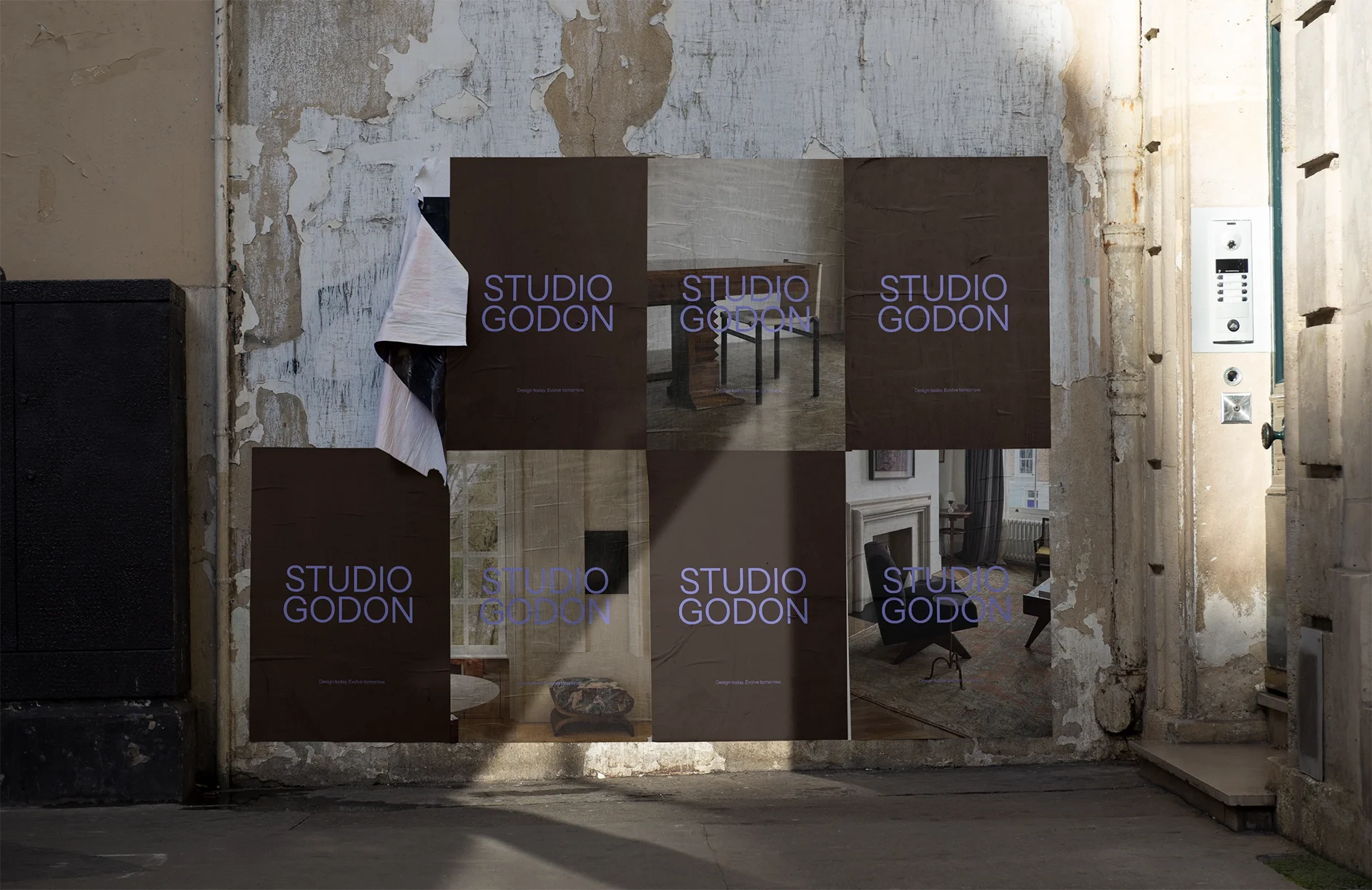
BRAND STRATEGY
Design today.
Evolve tomorrow.
The Brief:
Studio Godon came to us at a pivotal moment of growth. The studio had a strong design sensibility, clear values, and growing ambition, but lacked the strategic clarity needed to articulate its difference as it scaled.
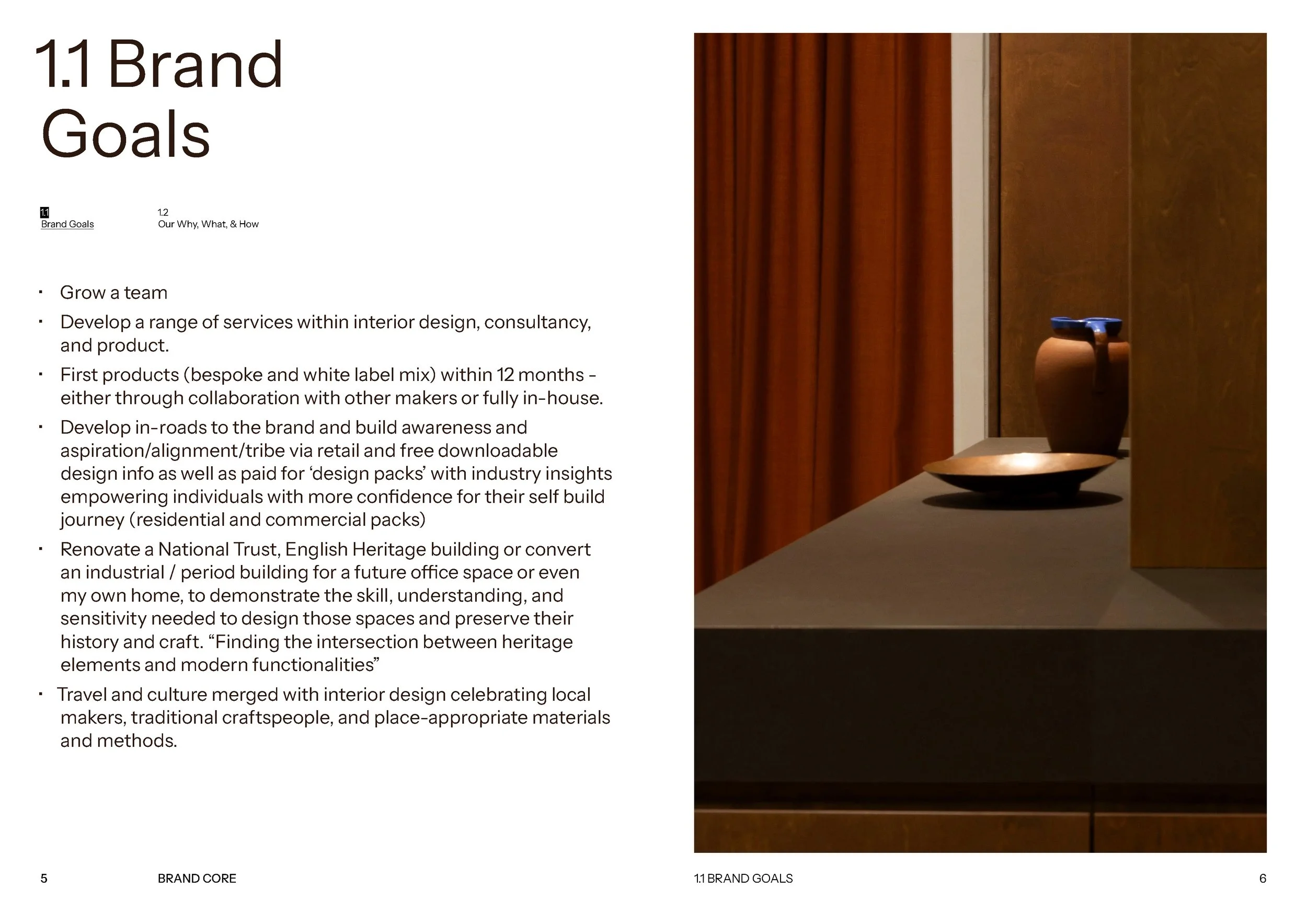
My brief was to create a solid strategic foundation that could support long-term growth, attract aligned clients, and clearly express what the studio stands for beyond aesthetics.
The Research:
We began by immersing ourselves deeply in the studio and its context. This included internal strategy work, founder interviews, audience mapping, and a detailed review of the competitive landscape.
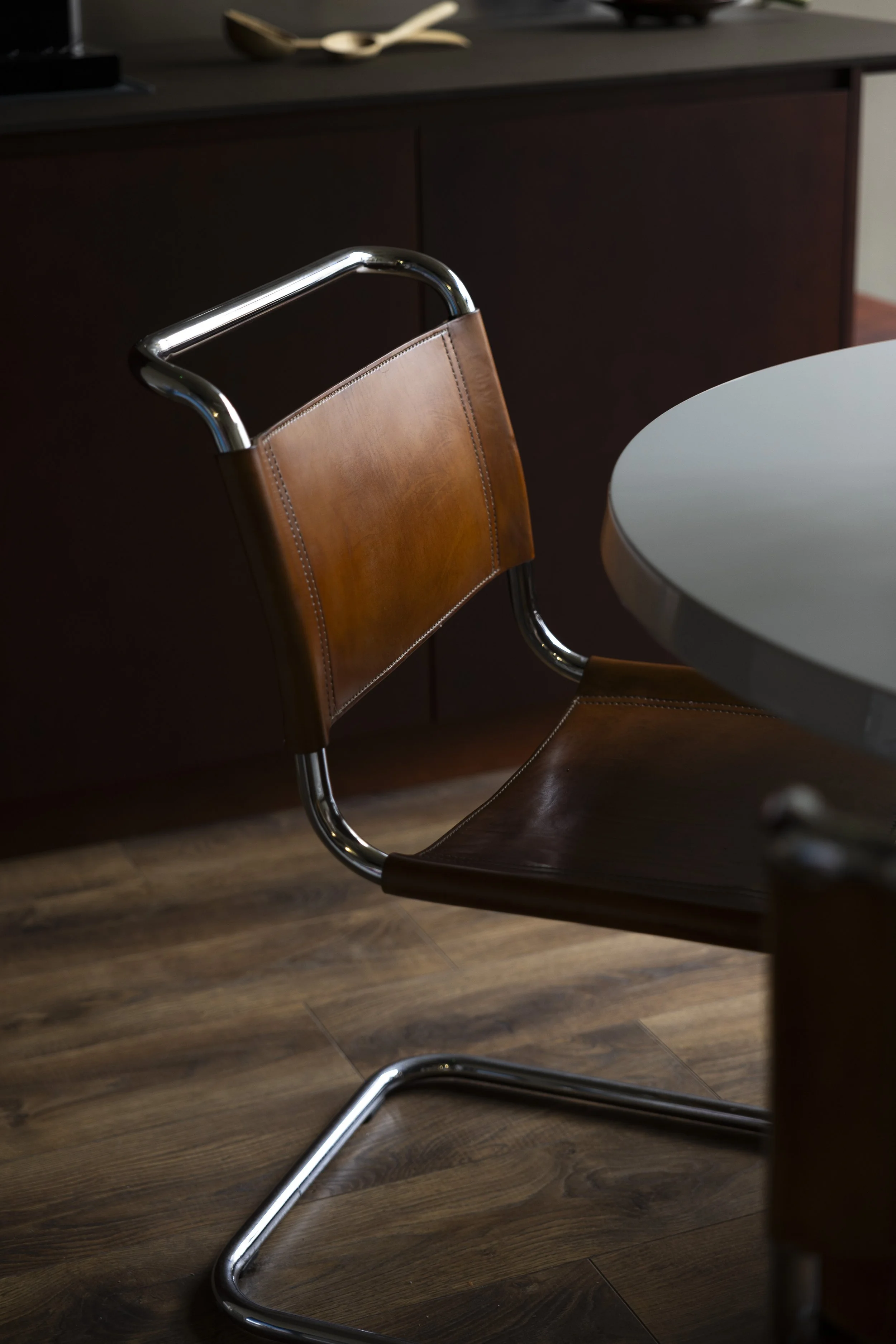
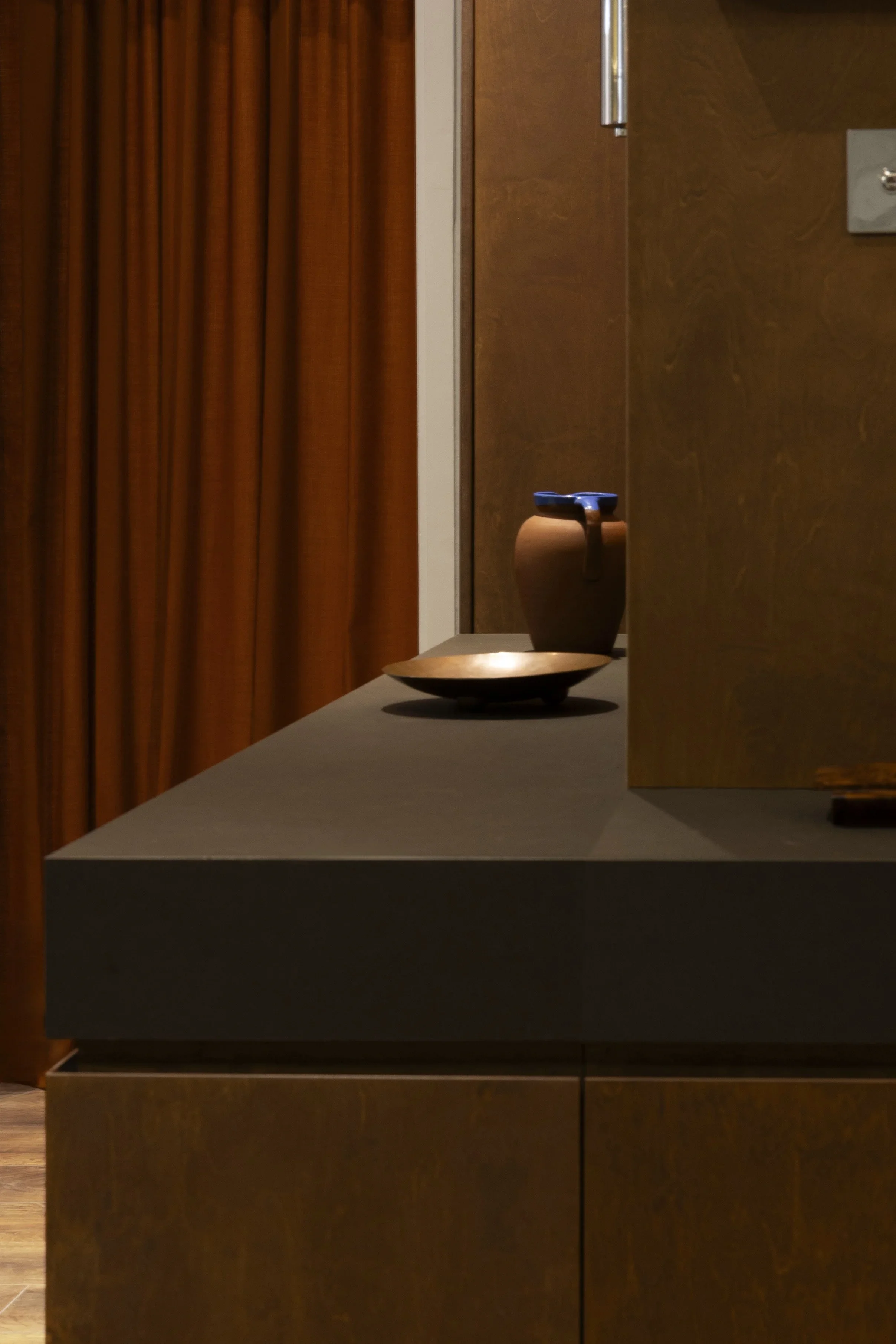
In parallel, we explored cultural shifts shaping how people live now. Uncertainty, changing family structures, evolving work patterns, smaller footprints, and growing awareness of environmental responsibility. These changes are reshaping not only how people use space, but what they expect from it.
The Brief, Reframed:
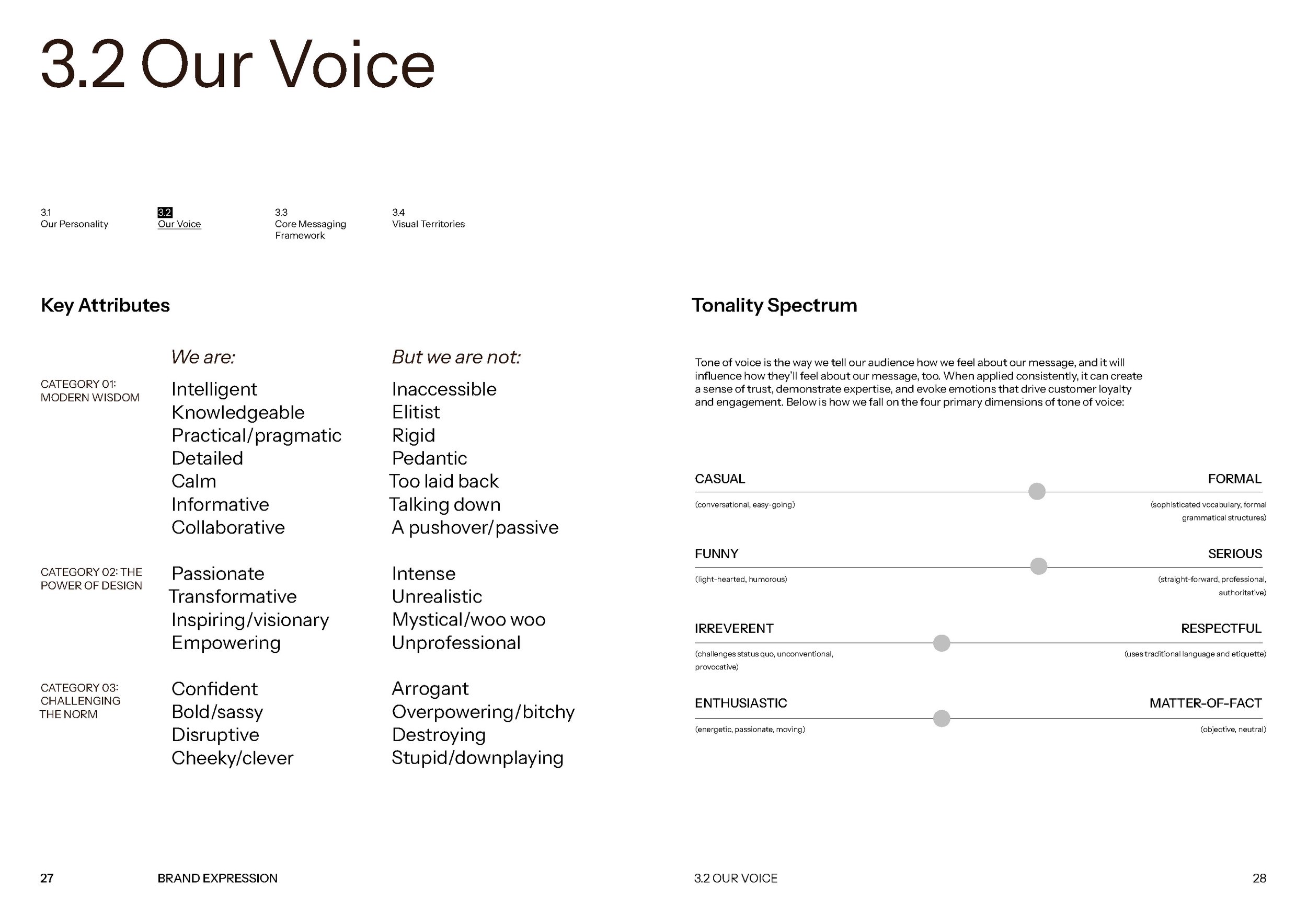
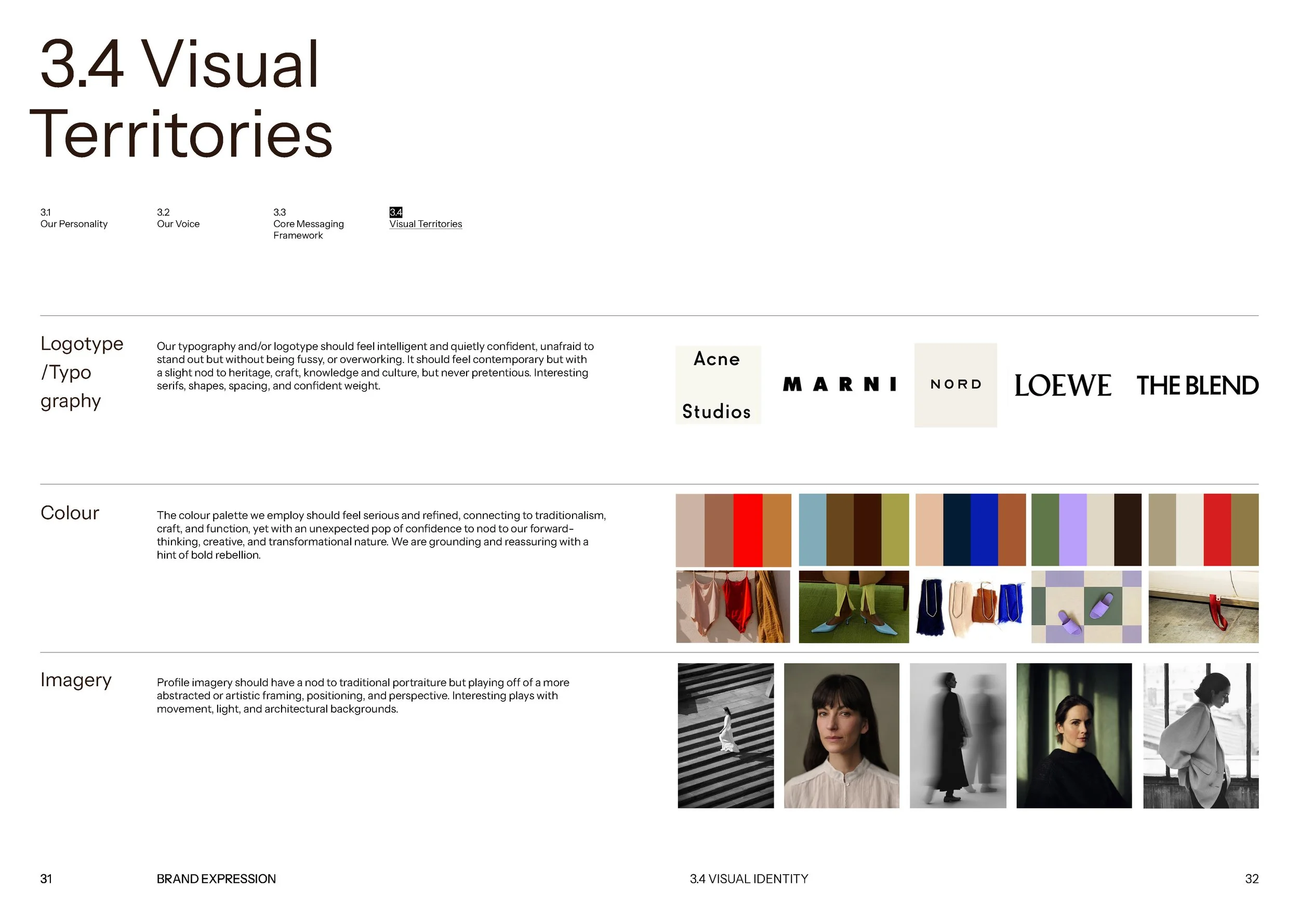
What became clear early on was that this was not a branding problem rooted in visuals or style. Studio Godon did not need a louder aesthetic or a sharper look.
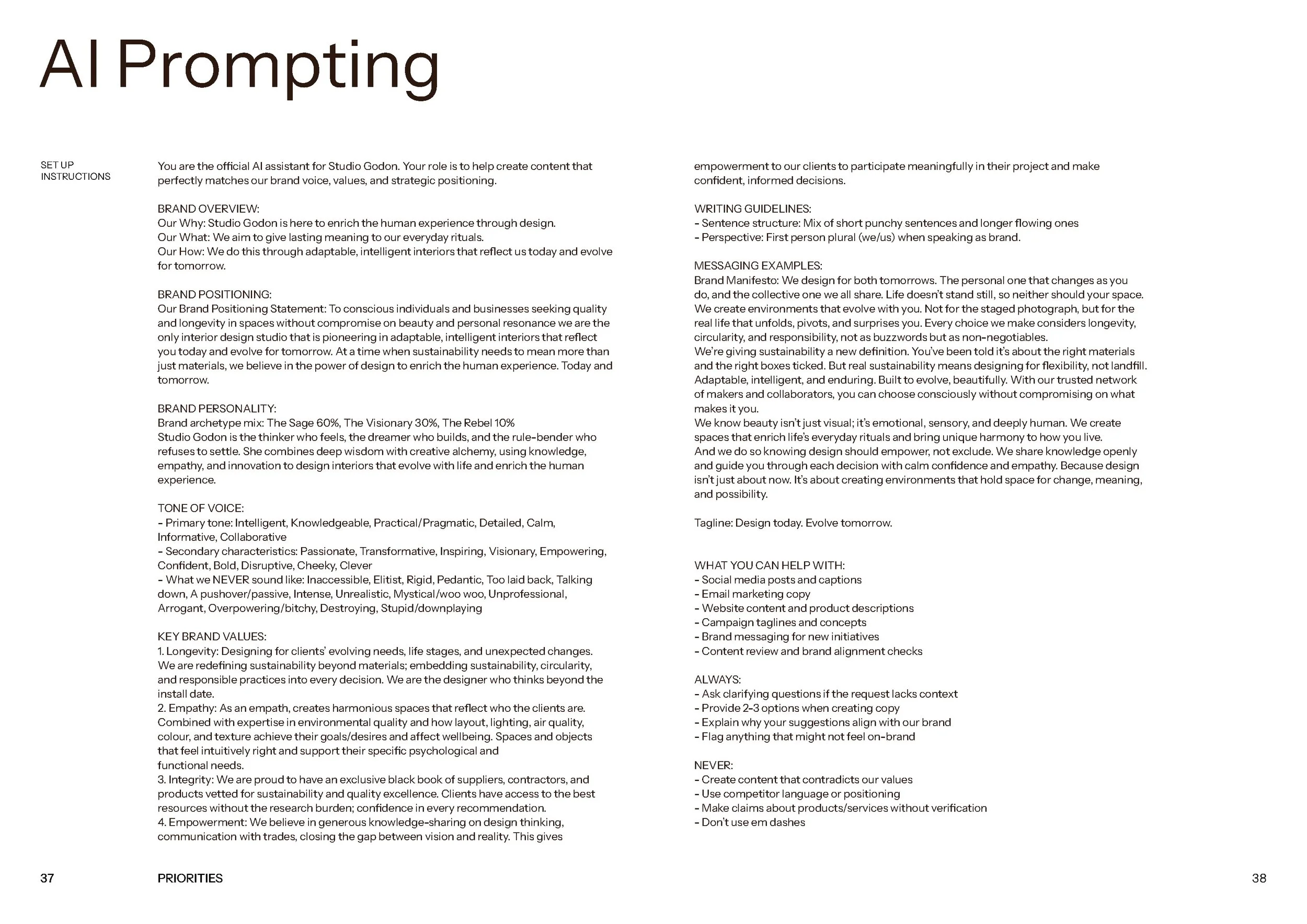
We reframed the brief from “How do we stand out?” to “What do we believe that others do not?”
Rather than positioning the studio through taste or trend, the opportunity lay in articulating a clear point of view about design’s role in people’s lives. A belief system, not a signature style. This reframing allowed us to move away from surface differentiation and toward strategic clarity grounded in meaning.
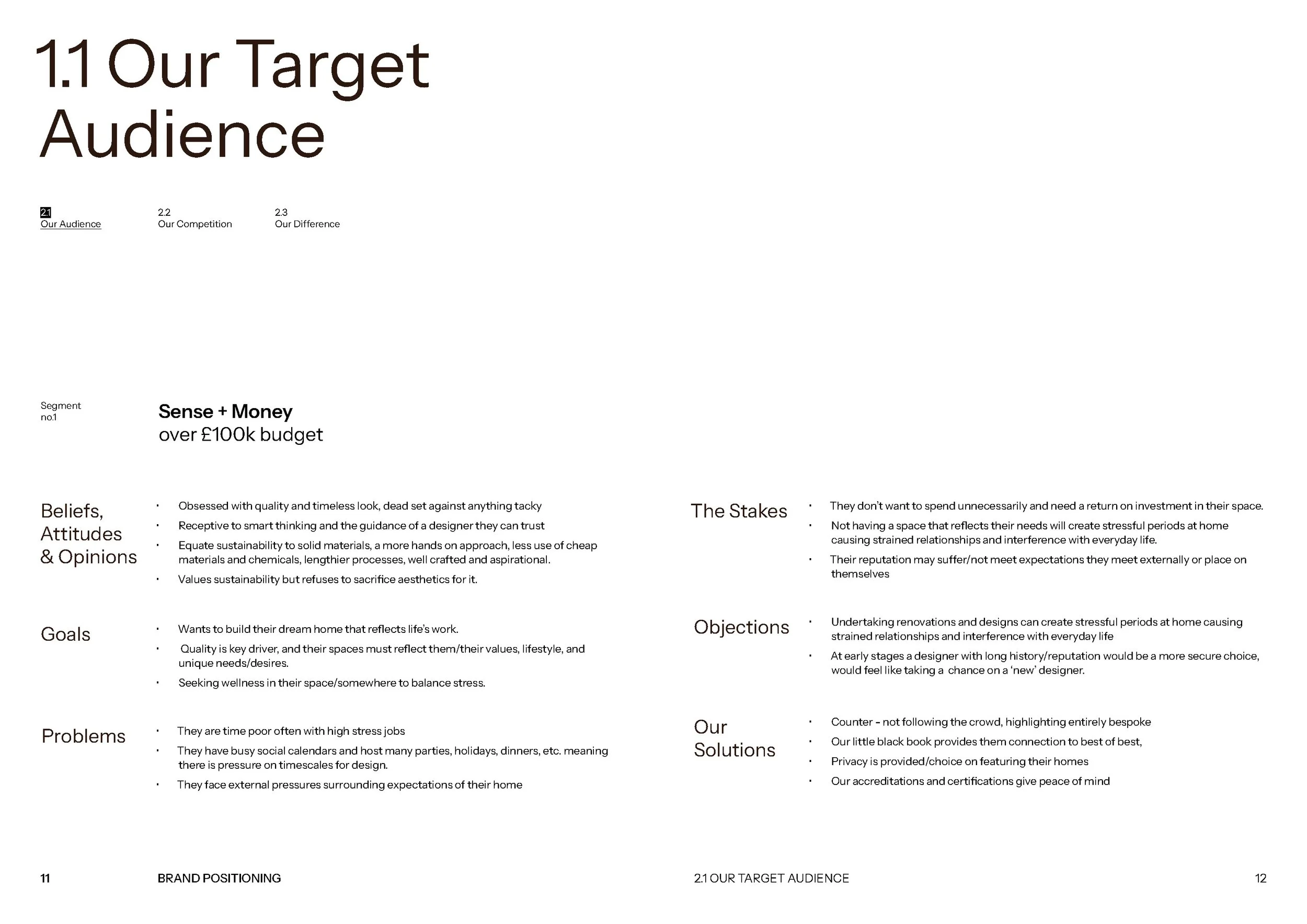
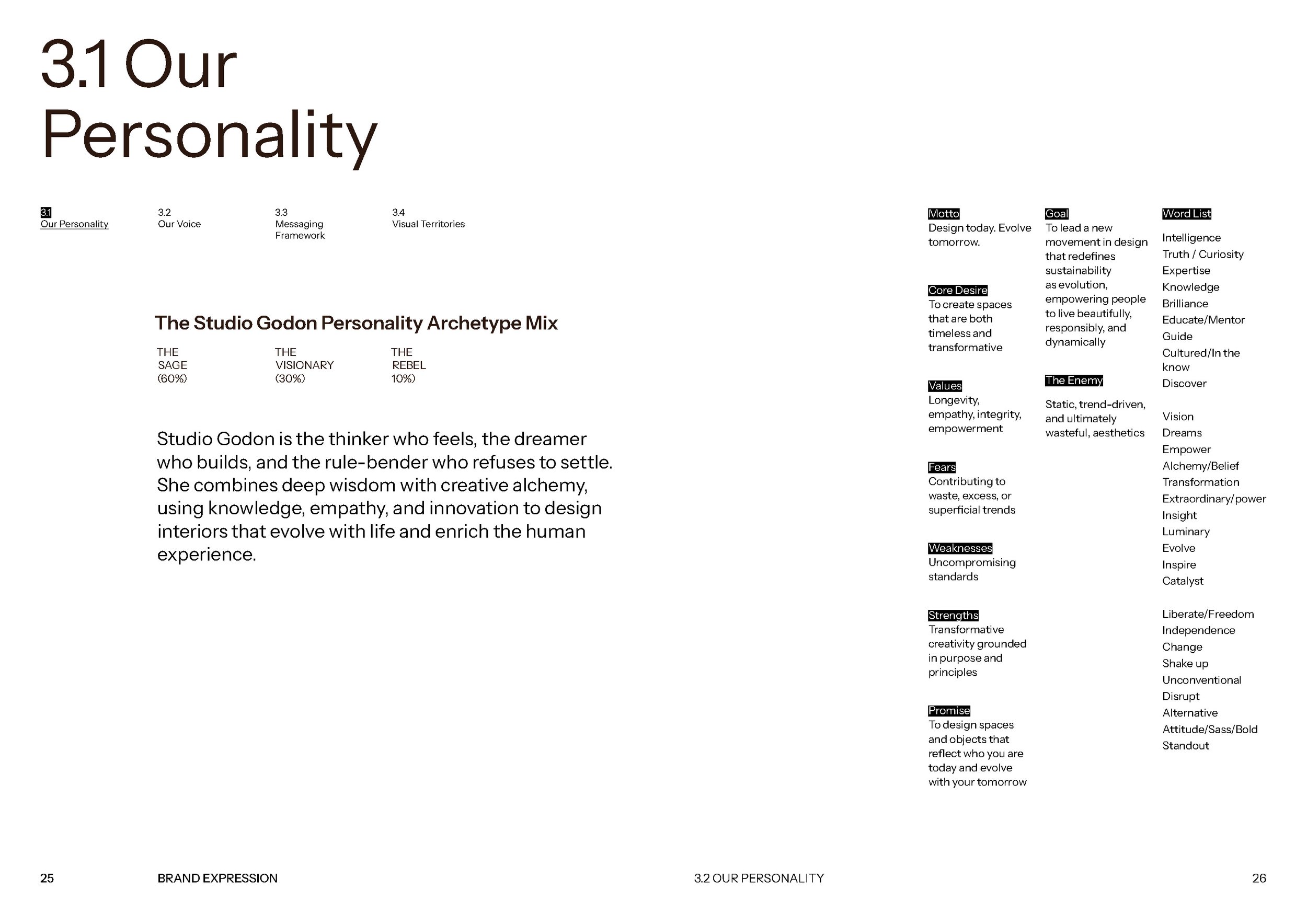
The audience: Through this work, we refined the studio’s audience beyond a generic idea of design-conscious clients.
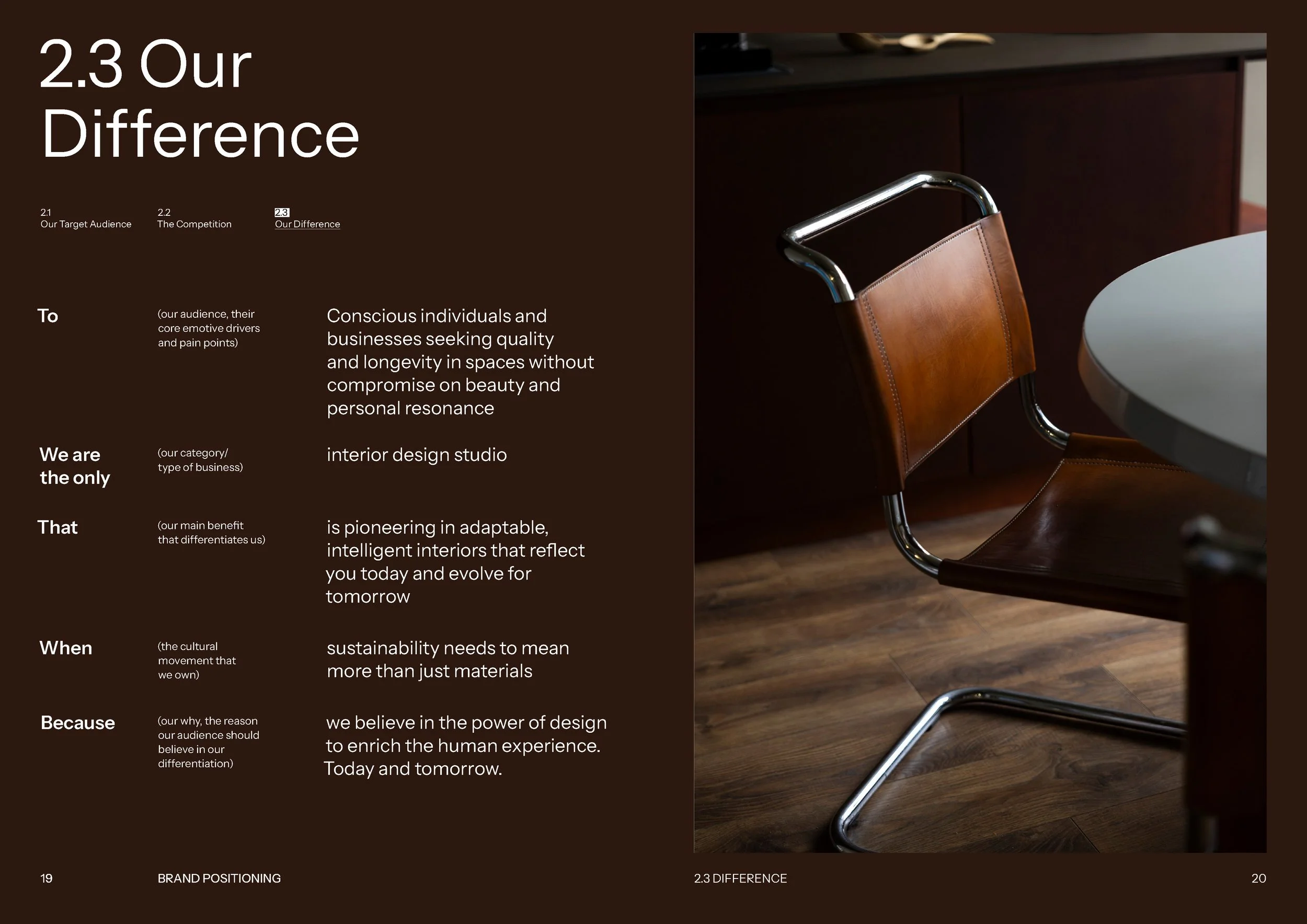
Studio Godon is for conscious individuals and businesses who value quality, longevity, and personal resonance, but refuse to compromise on beauty.
People who understand that their lives will change and want spaces that can adapt with them. Clients who see design not as a final outcome, but as a long term investment in how they live, feel, and function.
This shift brought clarity not only to who the brand speaks to, but who it intentionally does not.
Despite strong values and a clear design sensibility, the wider industry conversation around sustainability felt surface-level and saturated with familiar language. “Sustainable. Timeless. Thoughtful. Crafted”. Materials were being prioritised over long term thinking, while interiors were treated as static outcomes in a world that no longer stands still.
The Problem:
Despite strong values and a clear design sensibility, the wider industry conversation around sustainability felt surface-level and saturated with familiar language. “Sustainable. Timeless. Thoughtful. Crafted”. Materials were being prioritised over long term thinking, while interiors were treated as static outcomes in a world that no longer stands still.
Studio Godon was operating with a far deeper philosophy, but that thinking was not clearly visible in its positioning. As a result, the studio risked being grouped with practices that prioritise fixed aesthetics and trend longevity over real adaptability.
The problem was not lack of substance. It was lack of articulation.
The Answer:
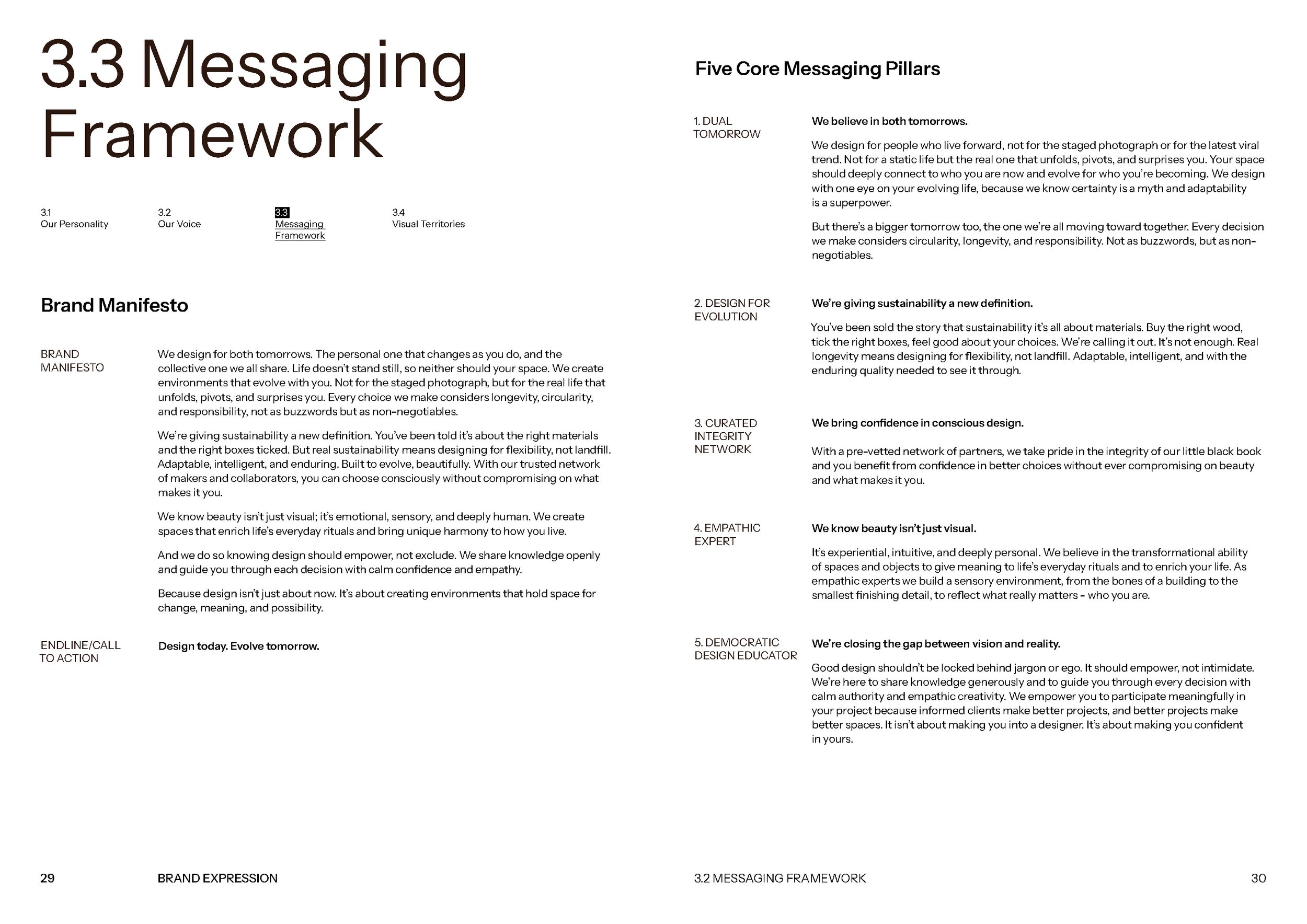
Sustainability alone is no longer enough. Adaptability is the real marker of responsible design. In a world defined by uncertainty and constant change, the most sustainable spaces are not those that simply last, but those that can evolve. Designing for flexibility, disassembly, movement, and future use is what truly prevents waste, protects investment, and supports human wellbeing.
Rather than competing with other studios on style, taste, or materials, Studio Godon could step out of comparison entirely by owning a cultural shift.
The Positioning:
Finally, we redefined what Studio Godon truly offers.
The studio does not simply design interiors. It delivers adaptable, intelligent environments and a design partnership grounded in empathy, integrity, and long term thinking. Spaces that reflect who clients are today, while remaining flexible enough to protect both their personal and our collective tomorrows.